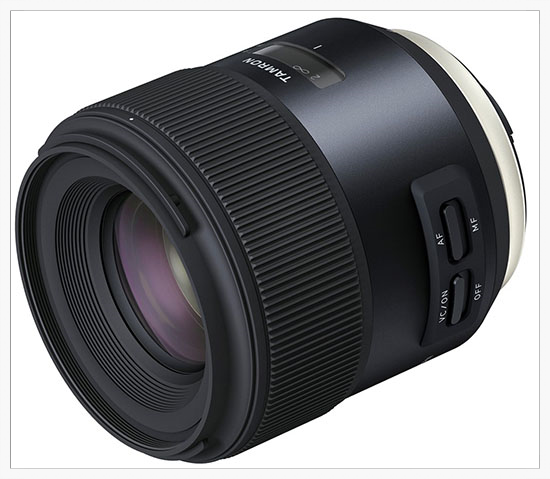
About a year ago, I decided I wanted to ditch my Fuji X100S in favor of a much more versatile and video-friendly setup. Like most people, I had a set budget. I also knew I wasn't willing to compromise on getting a full frame sensor, but even the cost-effective Nikon D750 body left me almost $1000 short on the Nikkor 24-70mm that I had been coveting as my workhorse lens. Having learned the same lesson time and time again about spending less now only to spend more later on the real deal piece of gear I should have gotten in the first place, this presented a problem.
It was then that a close friend and photographic mentor suggested I give the Tamron equivalent a whirl. Clocking in at $1299 with a $100 rebate and a very well-respected stabilization system, it left me wondering what corners were cut to get the price down well below the Nikkor's usual $2000 neighborhood. But the reviews were mostly favorable and stabilization can only help video so I went for it.
A few caveats:
- the D750 is my first full frame camera after owning a Fuji X100S and the Canon 60D
- I have never used the Nikkor linked above, or Nikon's recent update to the glass
- I think using charts to determine sharpness or giving shit like "chromatic aberration" (real as it might be) any credence in the age of Lightroom when buying a new lens is asinine
the meat and potatoes
What I can tell you is this: the Tamron won me over immediately. Images were razor sharp through the aperture range and with f/22 an option at the slow end, this lens is just at home facing a sunset-spiked mountain range with a fill flash as it is capturing candids at dusk with no flash whatsoever. I could read about now the Nikkor's auto focus is markedly faster, but if I simply asked myself if I had ever missed a shot because the Tamron was too slow, the answer is a definite "no".
It became clear that both Tamron and Sigma had figured out that they would never crack the branding coup that L-series and Nikkor lenses have enjoyed for decades. Their only solution to shake things up and capture any significant market share was to put everything into rivaling Canon and Nikon's optics and build quality and the price similar focal lengths well enough below their lofty competitors that getting 90 or 95% of the lens for $800 less is a no brainer for anyone not having their gear purchases subsidized by an employer.
Once I acquired Sigma's much-ballyhooed 35mm Art lens as my studio/portrait friend, I considered my dual lens system the best at its price point and range of functionality.
And then Tamron went and dropped two super fast (f/1.8) primes at 35mm and 45mm focal lengths respectively that are weather-sealed, stabilized and cheaper than the Sigma Art series they are so clearly targeting. A stabilized f/1.8 prime at $699 was enough to send me to Samy's for some reconnaissance that I had already tacitly accepted meant I was probably buying the bastard. The Sigma is a beast on a tripod or with ample light, but handheld it wasn't up to snuff for video despite its crazy fast f/1.4 aperture and other-wordly sharpness unless I was willing to shoot and ISO 3200 or higher.
What was meant to be a "try it once so you get it out of your system and then return it" buy became stuck to my D750 for an entire month before coming off. I had purchased an essential piece of gear for my video work; I just didn't know it until I started using it. It even gets the better of the Sigma in certain photo situations as well.
I'm not sure whether Tamron intended this, but what they have created is the perfect nexus of size and features to make this lens the centerpiece of a very compact, unobtrusive and shockingly capable handheld video rig.
why so good?
These are the five features that work together to achieve such sublime results:
- Small, light and built like a tank
- Best focus ring ever
- Better stabilization than the 24-70mm
- Shockingly gorgeous bokeh
- Near-macro level focus distance
That smaller and lighter is better when it comes to hand-held video should come as no surprise. What might be surprising to some is just how much of a difference those two qualities make when paired with Tamron's proprietary "Vibration Compensation (VC)" in terms of the overall steadiness and usability of video footage.
The focus ring is easily the best I have encountered. The gaps between the rubber teeth are slighter larger than on the Sigma and more rubbery than the Tamron 24-70mm, giving the 45mm superior grip than either of the others. It also has the perfect level of resistance and a very mechanical precision to its motion. When paired with decent focus peaking in an external monitor, it takes almost no time to nail rack after rack using manual focus like you were using a follow-focus on a tripod.
Everything I've mentioned so far would be enough to warrant buying this lens at $699. I do a fair amount of shooting in clubs and other dark, crowded venues in Los Angeles and that is exactly the type of challenging setting that was the 45mm's first real world test. I was consistently able to maintain the constant shutter speed needed for video even when shooting at 120th/sec for 60p video without having to crank the ISO into unusable levels or keep it locked at f/1.8 and risk DJs bobbing in and out of focus as I filmed them.
But then you throw in just stunning bokeh that is large and luscious and without any of the "onion" issues that are a slight annoyance with its larger sibling. Racking into focus with the 45mm wide open at f/1.8 produces very pleasing results indeed. The elaborate lighting and laser system used at The Belasco Theater in downtown Los Angeles became buttery dancing geometrics and then whipped back into sharp focus with ease. The end result of the shoot & edit:
And then the icing on an already tasty cake is the 45mm's ability to achieve sharp focus inches from a subject. It's good for artsy close ups and dramatic focus racks between foreground and background, but it also came in handy when the dance floor was at peak capacity and sometimes I could hardly clear 10 inches of space to film someone dancing in the crowd.
It doesn't sound like a huge amount when you compare to minimum focus distances of other lenses, but those few extra inches can actually add a lot of drama to your framing.
parting thoughts
As it turned out, what I thought would wind up being an ill-advised purchase mired in redundancy and inferiority with my other two staples turned out to be a stellar purchase. I now have a lens that makes small, unobtrusive shoulder rigs like my Hendo Garage options far beyond usable in a wide range of situations. Give yourself the gift of focus peaking and you honestly won't believe what you're able to pull off.
Once again, I haven't tried the Tamron 35mm or Nikon's updated Nikkor 24-70mm that now features stabilization, no doubt in direct response to Tamron's onslaught. All I can tell you is whether or not I am happy with the job the lens does when I need it to perform well. In this regard, I am left wondering what the basement really is with Tamron and Sigma at this point. It would take a lens with Art quality sharpness priced below $500 from Sigma to keep the arms race alive.
Considering I bought the first Tamron for $1300 and love it, I bought my Sigma 35mm Art for $900 and absolutely cherish it, and now I acquired the missing link in the evolution of my videography at $700, I wouldn't rule out something like that happening.
But even if it stopped here, what's abundantly obvious is that Sigma and Tamron have both figured out the formula for prying Nikon and Canon body uses away from the top tier lenses from the same brands. The new Nikkor 24-70mm has a supernaturally fast auto-focus...I tried it out in Samy's and was slightly unnerved at the raw speed of that glass.
But again, if you were to ask me to recall all of the times I missed a shot entirely because one of my three pieces of kit botched the focus or were too slow, I couldn't name one. So rest-assured, whether you have $700 or $7000 to burn on one piece of glass, that Zeiss Optikos will probably look unreal, but only the most demanding professional shooting in the most demanding conditions would consistently experience any issues with the Tamron 45mm at a fraction of the cost.
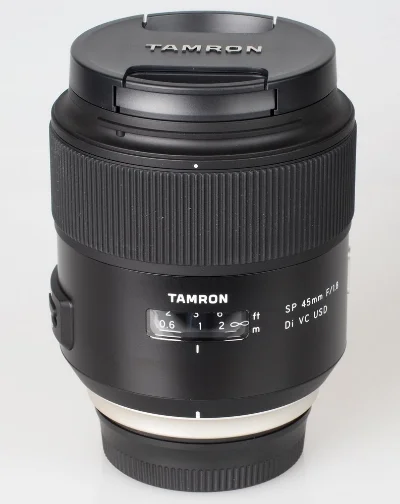
Weatherproof and smooth
If I had to choose one lens and one only to use for both photos and video, I would in all honestly pick the Tamron over my precious Sigma. While the Art lenses still reign supreme for raw sharpness at low ISO, they can't touch the Tamron's internal stabilization for video. Not even close.
Until, of course, they release a stabilized f/1.4 Art 50mm sometime next week...
RATING: 9/10